









RNG is a renewable energy produced from organic residual materials. It is generally considered “renewable” due to the biogenic origin of its inputs.
When produced in Quebec, GNR can support the circular economy by making use of local resources (agricultural waste, municipal organic waste, sludge, etc.)*. RNG production can offer an opportunity for various stakeholders, such as municipalities, agricultural producers, and other types of businesses, to derive value from their organic residual materials and, depending on the context, generate additional economic benefits.
Local RNG Production: A Strategic Priority for Énergir
Énergir has been active in the development of the RNG sector since the early days of renewable natural gas production in Québec and continues to play a role in this evolving field.
Why is Énergir investing in the development of the sector?
As the province’s main natural gas distributor, the company is involved in advancing the RNG sector with the aim of increasing the share of RNG locally produced within its supply portfolio. Currently, a significant portion of its supply comes from sources located outside Québec, namely the United States, and is accounted for in Énergir’s supply portfolio. The volumes and origins of Énergir’s RNG supply evolve over time.
Énergir is working to procure sufficient RNG volumes to meet the applicable regulatory target, which it supports, namely 10% of the total gas it distributes by September 31, 2031. Find out more about Énergir's regulatory target and its strategic orientations for decarbonization.
Gas from renewable sources (GRS) refer to a group of gases produced from organic materials or from energy derived from renewable sources, whose properties allow them to be integrated into a gas network. They notably include renewable hydrogen (green hydrogen) and renewable natural gas (RNG). RNG is therefore a type of GRS.
Like other so-called “renewable” energy sources (such as solar, wind, and hydroelectric power), RNG is considered renewable based on the origin of its inputs, as it is produced from renewable feedstocks. In the case of RNG procured by Énergir, it is produced from organic residual materials that regenerate over a period of a few months to a few years. Its environmental impacts depend on the specific project (inputs, operations, processes, leak management, etc.).
RNG is a gas produced from biogas resulting from the decomposition of organic residual materials, including those from agricultural operations, landfills, forest residues, or wastewater treatment plants. The biogas is captured and then purified to meet the specifications required for injection into a gas network. Once it meets applicable standards, it can be injected into the gas network. RNG can then be used for applications similar to those of fossil natural gas, with which it is compatible and interchangeable.
1. First-generation RNG produced through the decomposition of biomass, as opposed to second- and third-generation RNG.
An evolving sector in Québec
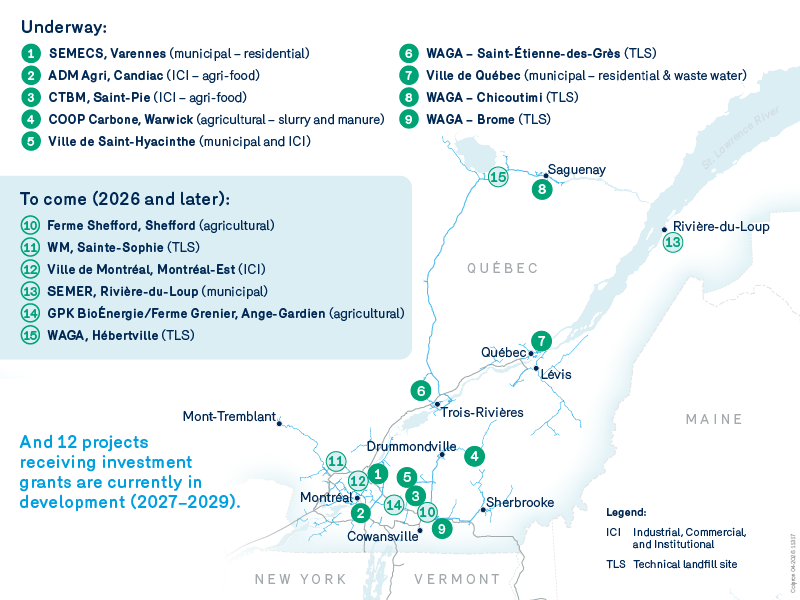
RNG production sites are increasing.
There are sites in operation in various regions of the province, and a significant number of GNR production projects are in development. Follow the progress of the sites on the interactive map (in French only).
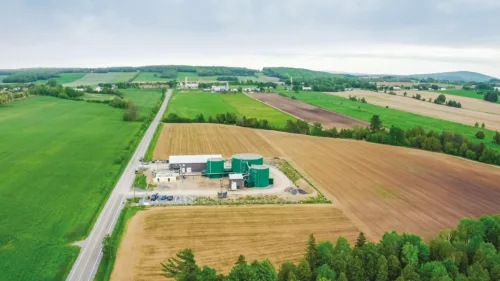
Interested in developing an RNG production project?
Énergir provides tools designed to facilitate the launch of new projects in Québec and support the development of the sector. These tools are intended, in particular, to help increase the volumes of renewable natural gas that can be injected into Québec’s gas network.
Mapping of favorable factors for development
Énergir has developed a map to provide accessible information on the RNG sector as well as on Énergir’s network.
New in 2026 : It notably features an agricultural RNG production potential index, designed as an indicative tool to highlight, across the territory, areas where feedstock potential and network proximity align.
Study on non-energy benefits by Aviseo
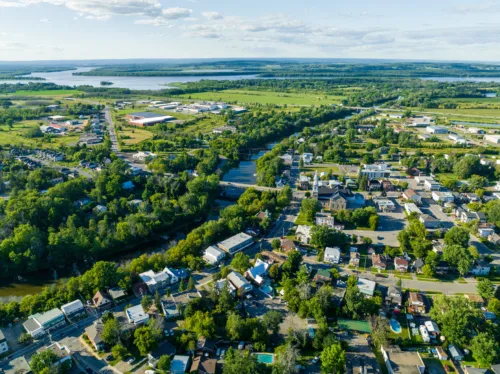
Énergir commissioned Aviseo Conseil to carry out a study outlining the RNG sector in Québec and assessing the economic impacts associated with current and future production.
Getting Started Guide
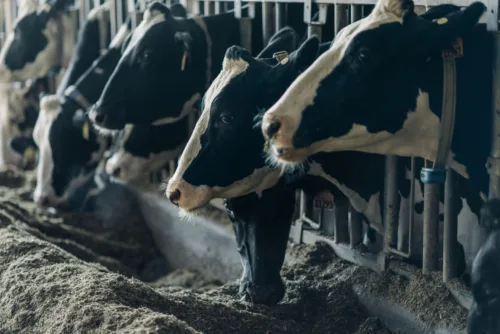
Consult this guide designed to support you through the initial steps, as well as the planning and execution of your RNG production project.
RNG Supply
As part of the development of the sector in Québec, Énergir purchases renewable natural gas (RNG) directly from producers, then distributes it to its customers or integrates it into cost socialization mechanisms, without any profit margin associated with this activity.
In certain contexts, RNG can serve as a decarbonization option for uses that are more difficult to electrify, while also representing a complementary solution during peak demand periods. It is compatible with existing gas infrastructure and can meet energy needs that are harder to electrify (industrial processes, winter peak demand, high-temperature heat).
As a natural gas distributor, Énergir aims to support you at various stages in the development of your RNG production project.
To help inform your business planning
To facilitate connection to Énergir’s network
- Evaluate one or more potential project sites, including proximity to the gas network and its capacity to accommodate additional RNG volumes.
- Gain a clear understanding of the terms and conditions for selling your RNG to Énergir.
- Conduct preliminary assessments to validate proximity to the gas network and its capacity to accommodate new RNG volumes nearby.
- Carry out the necessary studies to determine connection requirements (including hydraulic feasibility and techno-economic analyses).
- Enter into a gas receipt service agreement with Énergir for injecting production into its gas network.
- Coordinate the construction of the interconnection and manage the different phases of the project in compliance with applicable safety requirements, regulations, and standards.
- Proceed with commissioning, followed by the operation of the RNG injection station by Énergir.
To help inform your business planning
- Evaluate one or more potential project sites, including proximity to the gas network and its capacity to accommodate additional RNG volumes.
- Gain a clear understanding of the terms and conditions for selling your RNG to Énergir.
To facilitate connection to Énergir’s network
- Conduct preliminary assessments to validate proximity to the gas network and its capacity to accommodate new RNG volumes nearby.
- Carry out the necessary studies to determine connection requirements (including hydraulic feasibility and techno-economic analyses).
- Enter into a gas receipt service agreement with Énergir for injecting production into its gas network.
- Coordinate the construction of the interconnection and manage the different phases of the project in compliance with applicable safety requirements, regulations, and standards.
- Proceed with commissioning, followed by the operation of the RNG injection station by Énergir.
Contact our team
Obtain more information as part of your process or to have your questions about Énergir’s RNG supply answered.
Frequently Asked Questions
Several resources are available to better understand the RNG production potential in Québec:
RNG is recognized as an energy source within the climate change strategies of both the Québec and Canadian governments. In this context, various policies and programs support the development of renewable natural gas production. For example:
- Québec’s RNG Production Support Program
- Clean Fuels Fund
- Organic Waste Treatment Program through biomethanization and composting
- Technoclimat Program
- Écoleader Fund
The Association québécoise de production d’énergies renouvelables and the Canadian Biogas Association are active organizations in Canada.
There are several ways to learn about this growing industry in Québec and about operating an RNG production facility.
For example:
- The RNG Forum organized by BiogasWorld
- Webinars and reports from industry associations
- Agricultural biomethanization training offered by the Institut de technologie agroalimentaire du Québec
- Biomethanization operations training by EnviroCompétences
- Attestation of College Studies (ACS) – Biomethanization, composting and residual materials management program at Cégep de Rivière-du-Loup
*The production of renewable natural gas (RNG) can, depending on the project, contribute to the valorization of organic residual materials. Depending on the production pathway, the inputs used, operating conditions, control measures in place (notably leak management), and the scope of the assessment, it may also, in certain cases, help reduce some greenhouse gas emissions associated with the use of fossil fuels in Québec, on a life-cycle basis, compared to fossil natural gas.