






RNG Production Process at a Glance
RNG Production Cycle
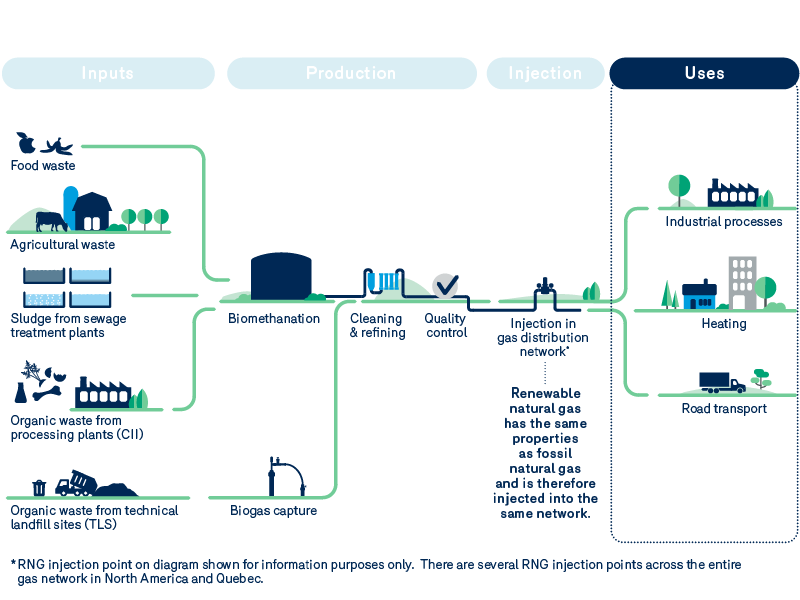
RNG is produced through the anaerobic digestion of organic residual materials. This process, known as biomethanization, can occur naturally in the environment or, for example, in landfill sites. It can also be replicated and optimized in a controlled setting, such as a biomethanization facility.
1
Feedstocks
2
RNG Production
3
Injection
4
End Uses
RNG is produced from the anaerobic decomposition of organic residual materials, notably from agricultural, industrial, and municipal sources. It can, for example, be generated from crop residues or food processing by-products, manure and slurry, as well as biosolids from wastewater treatment or other organic residual materials generated by households.
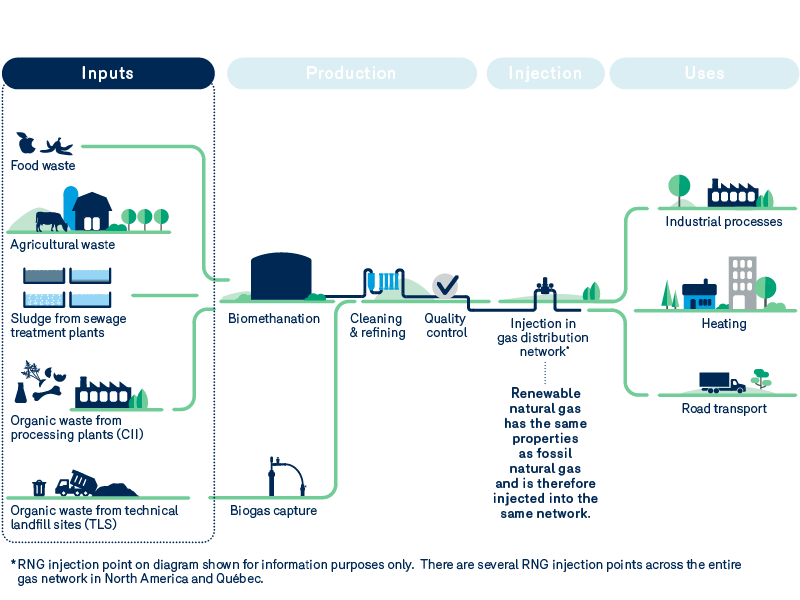
Organic materials are fed into a biodigester, where they are converted into biogas. This biogas is then purified to produce a gas with characteristics similar to those of fossil natural gas: RNG. Once it meets applicable standards, it can be injected into the gas network. The process also generates digestate, which may, under certain conditions, be used as a fertilizer or soil amendment, depending on regulatory requirements, digestate quality, and applicable practices.
There are various proven technologies for producing and upgrading biogas, with the choice depending in part on the type of feedstocks and the specific context of the project. In the case of landfill sites, biogas is directly captured from the cells where residual materials are buried and is then purified before being injected into the gas network.
To learn more about RNG production in Quebec, visit our page.
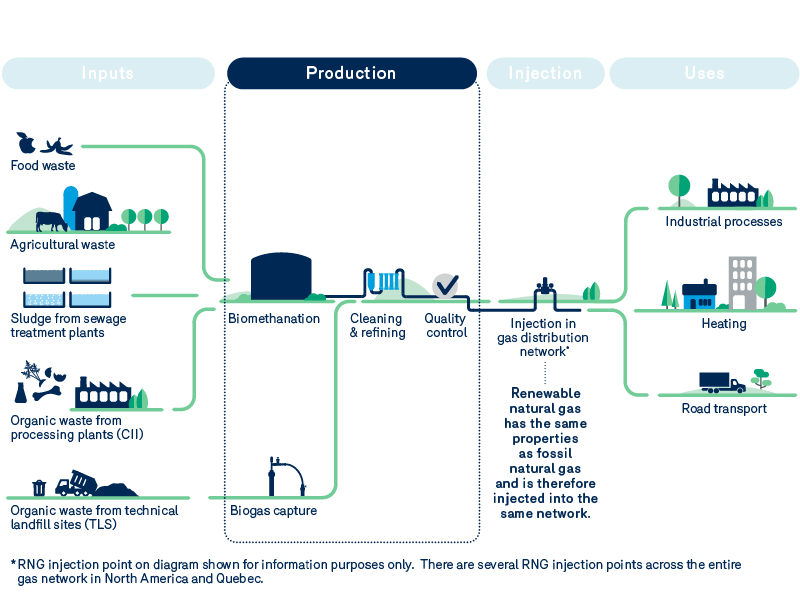
NG is measured, odorized, and monitored to ensure it meets required standards and specifications. When produced locally, it can be injected into Énergir’s gas network for distribution.
An RNG production site can be directly connected to the gas network. In some cases, the RNG produced may also be liquefied or compressed and transported by truck to an injection point.
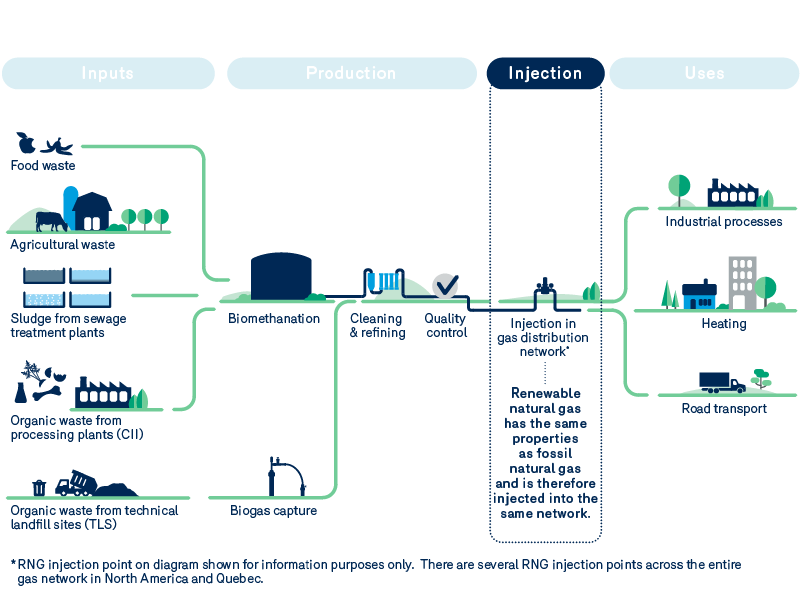
Once injected into Énergir’s network, RNG has characteristics similar to those of fossil natural gas and can be used for comparable applications, including transportation, heating, cooking, and hot water production.
When produced locally, RNG production can also support the development of a circular economy at the regional level, depending on the context and specific projects.
To learn more about RNG distribution, visit the renewable natural gas distribution page.
1
Feedstocks
RNG is produced from the anaerobic decomposition of organic residual materials, notably from agricultural, industrial, and municipal sources. It can, for example, be generated from crop residues or food processing by-products, manure and slurry, as well as biosolids from wastewater treatment or other organic residual materials generated by households.
2
RNG Production
Organic materials are fed into a biodigester, where they are converted into biogas. This biogas is then purified to produce a gas with characteristics similar to those of fossil natural gas: RNG. Once it meets applicable standards, it can be injected into the gas network. The process also generates digestate, which may, under certain conditions, be used as a fertilizer or soil amendment, depending on regulatory requirements, digestate quality, and applicable practices.
There are various proven technologies for producing and upgrading biogas, with the choice depending in part on the type of feedstocks and the specific context of the project. In the case of landfill sites, biogas is directly captured from the cells where residual materials are buried and is then purified before being injected into the gas network.
To learn more about RNG production in Quebec, visit our page.
3
Injection
NG is measured, odorized, and monitored to ensure it meets required standards and specifications. When produced locally, it can be injected into Énergir’s gas network for distribution.
An RNG production site can be directly connected to the gas network. In some cases, the RNG produced may also be liquefied or compressed and transported by truck to an injection point.
4
End Uses
Once injected into Énergir’s network, RNG has characteristics similar to those of fossil natural gas and can be used for comparable applications, including transportation, heating, cooking, and hot water production.
When produced locally, RNG production can also support the development of a circular economy at the regional level, depending on the context and specific projects.
To learn more about RNG distribution, visit the renewable natural gas distribution page.
What is biomethanization?
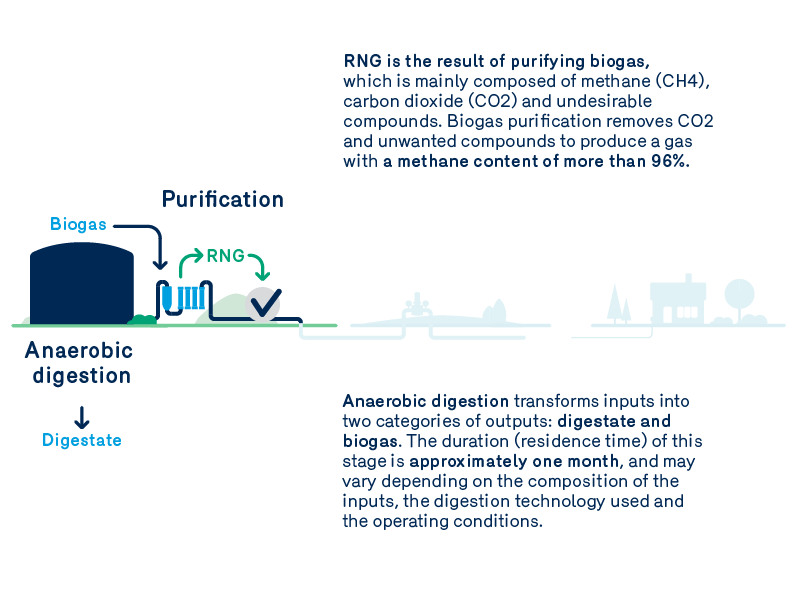
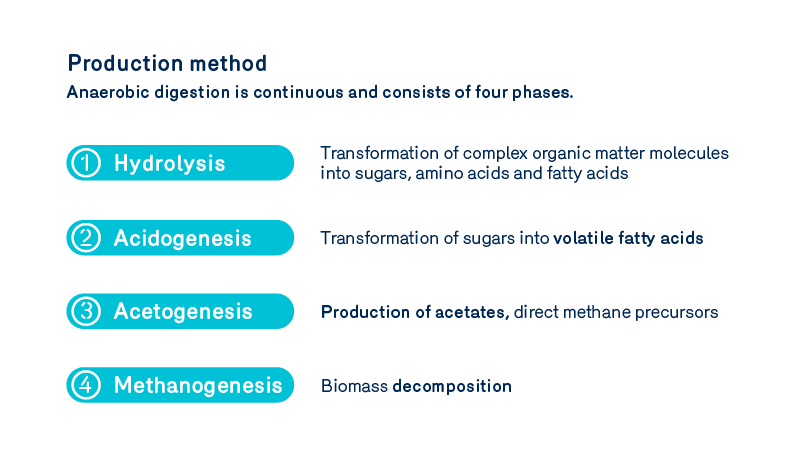
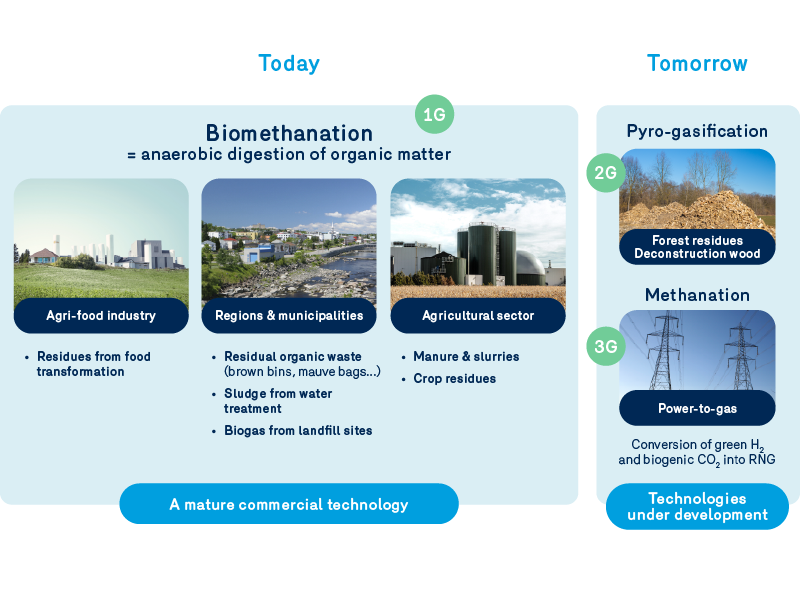
This production process, also known as a first-generation process, is well-established and used in many parts of the world.
Other promising second- and third-generation technologies for producing renewable source gases are currently under development.
These processes could help valorize additional types of residual materials that regenerate over a period of a few years, enabling the production of gases from renewable source (GRS), also referred to as synthetic natural gas (2G) and syngas (3G) (for example, gas produced through the gasification of forest residues, non-recyclable solid waste, or the conversion of lignocellulosic biomass).
Both types of renewable source gases (RNG and synthetic natural gas) are interchangeable with fossil natural gas. Second- and third-generation production could enable the production of larger volumes of GRS and, as such, could contribute to decarbonizing uses that are more difficult to electrify, particularly in the industrial sector.
Frequently Asked Questions
The combustion of RNG is not emission-free; it generates greenhouse gas (GHG) emissions (CO₂, CH₄, and N₂O), just like the combustion of fossil natural gas. CO₂ is the primary GHG emitted (accounting for more than 99% of combustion emissions).
However, in the case of RNG, the CO₂ emissions resulting from its combustion are considered biogenic, as they originate from biomass. These biogenic CO₂ emissions are generally treated differently in GHG inventories, since they are part of the short carbon cycle and are not typically targeted by climate mitigation objectives, unlike emissions from fossil fuels.
While CO₂ from fossil natural gas combustion can be reabsorbed by biomass through photosynthesis, burning fossil natural gas releases CO₂ that has been stored in geological formations for millions of years, resulting in a net addition of CO₂ to the atmosphere.
By contrast, when RNG is combusted, the CO₂ released into the atmosphere (biogenic CO₂) was previously stored in organic residual materials (food waste, slurry, manure, wastewater, etc.), which regenerate over a period of a few months to a few years. This biogenic CO₂ was originally present in the atmosphere, absorbed by organic matter, and may be re-emitted as part of this short cycle.
In addition, in certain contexts, RNG production can help avoid methane (CH₄) emissions that would otherwise occur under conventional organic waste management practices, such as the decomposition of manure and slurry. The magnitude of these avoided emissions depends on factors such as waste management practices, technologies used, operating conditions, and the baseline scenario used for comparison.
As such, the overall impact of RNG on GHG emissions varies depending on the production pathway, feedstocks, and operational parameters.
To meet its regulatory RNG distribution targets, Énergir primarily procures RNG from producers located in the United States, while working to increase its supply from producers in Québec.
The quantity of RNG purchased by Énergir from each producer is injected by that producer into the gas network in the region where it is produced. It may therefore be injected into Énergir’s network or that of another distributor in North America, where it mixes with fossil natural gas circulating in the same system. As with fossil natural gas or electricity supply, once energy is injected into a gas or power grid, it is not possible to track a specific gas molecule or electron, as they are consumed by all users connected to the network.
The volume of RNG purchased by Énergir replace the amount of fossil natural gas it procures as part of its overall supply. Since RNG and fossil natural gas circulate and mix within the same network without being distinguishable, Énergir has its supply verified annually by an independent third party. This verification ensures that, on an annual basis, the total RNG procured from producers is at least equal to the volume purchased by its customers, and that the RNG supplied is 100% derived from organic sources (i.e., contains no fossil molecules).