








What is dual energy?
Dual energy means using two complementary energy sources to heat your buildings: electricity and natural gas. In a dual energy system, electricity is used as the main source of heating. During periods of extreme cold (from -12°C to -15°C depending on the region), when electricity demand peaks, natural gas takes over. This complementarity ensures optimal use of energy resources while maintaining the comfort of your occupants.
Dual energy is for Énergir current customers who use a natural gas-fired central heating system and meet the eligibility criteria. Under certain conditions, new construction may also be eligible for the dual-energy offer. Talk to your representative.

Optimize your operating costs
By taking advantage of lower electricity rates1 and using natural gas in cold weather during peak consumption periods, you could see substantial savings on your energy budget2.

Access attractive grants
Hydro-Québec and Énergir, with the support of the Quebec government as part of the 2030 Plan for a Green Economy**, are joining forces to offer you a generous grant to help you convert to dual energy. This assistance can cover up to 80%3 of the extra cost of buying and installing your new equipment. The opportunity to replace your old systems with more energy-efficient equipment, at a lower cost.
As your main point of contact, Énergir facilitates the process and supports you every step of the way.

Contribute to the energy transition
As a rental owner or manager choosing dual energy, you play an active role in reducing GHG emissions and align your operations with the government’s environmental targets.
Customer testimonial
“The grant program, which covers up to 80% of the extra cost, was key to this decision, as were the anticipated potential savings.” - Kai Zhang, HELISIS
« After 6 months, we were able to reduce the energy costs of the building by about 40%. » - Gabriel Chauvin, HELISIS

4-7 dwellings

8-19 dwellings

20+ dwellings
Grants
| 4-7 dwellings | Up to $1,000 per unit and $200 per ton of GHGs avoided3. |
Example : For a 6-unit multi-residential building, you could benefit from $8,1253 in available grants.
You could also benefit from additional grants of up to $9,4003 for an electrical upgrade leading to increased amperage.
Grants since June 18, 2024.
Savings
In addition to grants, here is an example of potential savings:
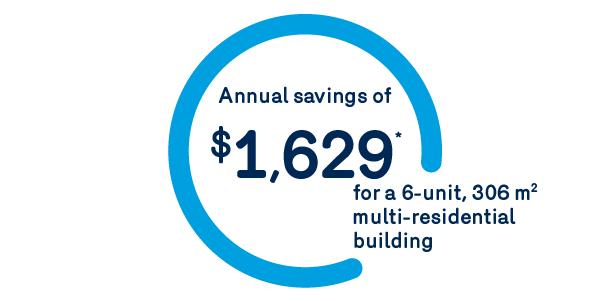
Grants
| 8-19 dwellings | Up to $1,000 per unit and $200 per ton of GHGs avoided3. |
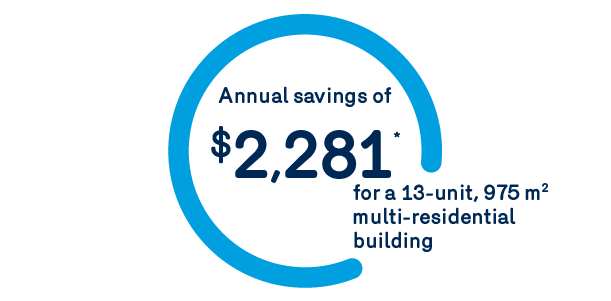
Example : For a 13-unit multi-residential building, you could benefit from $17,6853 in available grants.3
You could also benefit from additional grants of up to $17,7253 for an electrical upgrade leading to increased amperage.
Grants since June 18, 2024.
Savings
In addition to grants, here is an example of potential savings:
Grants
30 dwellings Scenario: Addition of 42 kW electric boiler + 2 air-to-air heat pumps with 4-ton hydrobox. Metering separation 200 amps. | In this case, you could benefit from $103,1103 in available grants. |
60 dwellings Scenario: Addition of 216 kW electric boiler + Increase in three-phase electrical capacity 600 amps. Associated metering separation. | In this case, you could benefit from$157,3703 in available grants. |
Grants since June 18, 2024.
Savings
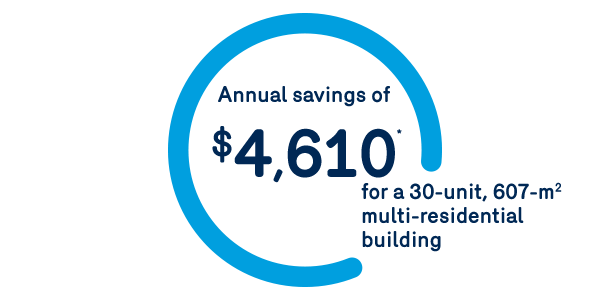
In addition to grants, here is an example of potential savings:
4-7 dwellings
Grants
| 4-7 dwellings | Up to $1,000 per unit and $200 per ton of GHGs avoided3. |
Example : For a 6-unit multi-residential building, you could benefit from $8,1253 in available grants.
You could also benefit from additional grants of up to $9,4003 for an electrical upgrade leading to increased amperage.
Grants since June 18, 2024.
Savings
In addition to grants, here is an example of potential savings:
8-19 dwellings
Grants
| 8-19 dwellings | Up to $1,000 per unit and $200 per ton of GHGs avoided3. |
Example : For a 13-unit multi-residential building, you could benefit from $17,6853 in available grants.3
You could also benefit from additional grants of up to $17,7253 for an electrical upgrade leading to increased amperage.
Grants since June 18, 2024.
Savings
In addition to grants, here is an example of potential savings:
20+ dwellings
Grants
30 dwellings Scenario: Addition of 42 kW electric boiler + 2 air-to-air heat pumps with 4-ton hydrobox. Metering separation 200 amps. | In this case, you could benefit from $103,1103 in available grants. |
60 dwellings Scenario: Addition of 216 kW electric boiler + Increase in three-phase electrical capacity 600 amps. Associated metering separation. | In this case, you could benefit from$157,3703 in available grants. |
Grants since June 18, 2024.
Savings
In addition to grants, here is an example of potential savings:
* For information purposes only. The average annual savings for space heating vary based on several factors, such as the type of building, the heating system and the equipment installed. Calculations based on Énergir and Hydro-Québec rates for October 2025.
Ready to switch to dual energy?
Énergir is there to guide you every step of the way, from initial support – including potential grant applications – to commissioning of the dual energy solution in your buildings. Contact us now for a personalized consultation.
Frequently asked questions
Dual energy involves replacing a 100% natural gas heating system with one that uses two energy sources:
- Electricity as the primary source (approximately 70% of consumption)
- Natural gas as a backup source during cold periods (from -12°C to -15°C depending on the region) when demand for electricity is very high
Our offer is intended to increase the share of electricity used to heat buildings, reducing natural gas consumption and greenhouse gas (GHG) emissions while stabilizing peak electricity demand in cold weather.
Converting your system to dual energy involves adding an electric heating system and, in some cases, upgrading your existing heating system. Grants for the purchase and installation of equipment are offered by Hydro-Québec et Énergir, with support from the Quebec government as part of the Plan for a Green Economy 2030. They can cover up to 80%3 of the extra-cost of the work.
The Government of Québec’s contribution is part of the 2030 Plan for a Green Economy and is funded through the Electrification and Climate Change Fund, which receives the proceeds generated by the carbon market.
Customers with an electric/natural-gas heating system can get attractive dual-energy pricing from Hydro-Québec or the dual-energy rate from their electrical distributor. Natural gas is billed at the customer’s regular rate.
For applications submitted after April, 1st 2026
**. The Government of Québec’s contribution is part of the 2030 Plan for a Green Economy and is funded through the Electrification and Climate Change Fund, which receives the proceeds generated by the carbon market.
1. Residential customers with an electricity/natural-gas heating system are eligible for Hydro-Québec’s Rate DT for all of their household consumption, or their electrical distributor’s dual-energy rate where applicable.
Business customers with an electricity/natural-gas heating system are eligible for the small- and medium-power dual-energy rate for space heating between October 1 and April 30 inclusive (electricity for other uses is covered by a separate Rate G, M or G9 subscription, as applicable, as is electricity consumed between May 1 and September 30 inclusive).
2. Economic competitiveness depends on a number of factors, including the type of building, the equipment used and the current rate.
3. Certain conditions apply. Grants may vary according to building characteristics, type of heating, the equipment purchased as well as the work required for their installation.
As part of the Dual Energy Program, the grant amount can cover up to 80% of the extra costs for eligible Residential projects; and up to 80% of the extra costs for eligible projects with a maximum amount of $250,000 per site in the Business category.
Additional costs related to the required electrical work may be added to the purchase and installation costs of the equipment. Grant conditions and amounts may be changed without notice.
To learn about the conditions and eligibility criteria, please consult the Dual Energy Program Participation Guide.

© 2004-2026, Énergir. All rights reserved.