









What is renewable natural gas?
Produced from organic waste RNG is a renewable energy source that can replace fossil energy and help reduce greenhouse gas (GHG) emissions targeted in the fight against climate change.
Québec’s energy future depends on increasing its production and use of renewable energies, such as solar and wind power, hydroelectricity, and renewable natural gas, also called RNG. RNG is renewable because it’s produced from methane emitted in the breakdown of organic waste, such as food and agricultural waste. Examples include table scraps, wastewater, cow dung and organic matter in landfills. They are abundant and can be continuously renewed.
Processes such as biomethanation or biogas capture in landfills enable methane to be recovered from organic waste in order to produce renewable natural gas. The RNG is purified and injected into the gas network and provides energy that can be used for industrial purposes, to heat buildings, in particular during peak winter demand or when there are energy capacity issues, or to power heavy vehicles.
All organic waste that is recovered, i.e., the methane produced by its degradation, and every biomethanation project in Québec contributes to decarbonizing the energy distributed by the gas network. These projects are growing in number and enabling cities, regions, communities and businesses to repurpose their organic waste into 100% renewable energy produced locally.
Let’s imagine energy differently, with renewable natural gas.
Benefits of RNG

Gradually replacing a fossil energy source
RNG has characteristics similar to fossil natural gas and is interchangeable with it. As such, RNG can be:
- Used for the same purposes, without requiring customers to change their gas appliances;
- Injected into the existing gas network.
Énergir is also required to distribute a certain quantity of RNG each year to replace volumes of fossil natural gas in order to comply with the regulatory obligation related to RNG.
Learn more about the RNG regulatory obligation and thresholds.

Contributing to the energy transition
RNG is recognized by the Government of Québec as a renewable energy source that contributes to the greenhouse gas (GHG) emissions reduction targets set out in the 2030 Plan for a Green Economy (PGE), namely a 37.5% reduction in direct and indirect GHG emissions (Scopes 1 and 2) from its natural gas distribution activities compared to 1990 levels by 2030.

Supporting the circular economy
RNG can be produced locally, and Énergir is working to increase its supply of RNG sourced from Quebec, although currently the majority of its supply comes from the United States. GNR production could indeed enable municipalities, farmers, and even other types of businesses to develop new sources of revenue from their organic waste.
Taking action with RNG
Purchasing RNG
If some of your municipal buildings run on natural gas, you can choose to purchase a percentage of RNG based on the volume of gas you consume. With this RNG purchase, an equivalent portion of your fossil natural gas purchase is replaced with renewable energy.
This RNG purchase can contribute to your environmental objectives and be reported in your GHG inventory.
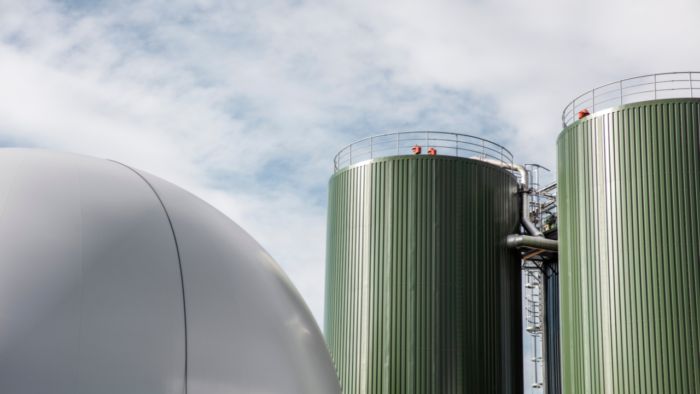
Developing an RNG production project
Renewable natural gas production can enable municipalities to develop new sources of revenue from organic residual materials and generate positive economic benefits. Would you like to assess the potential for a project in your community? Énergir offers a range of tools and resources to support you in the early stages of development.
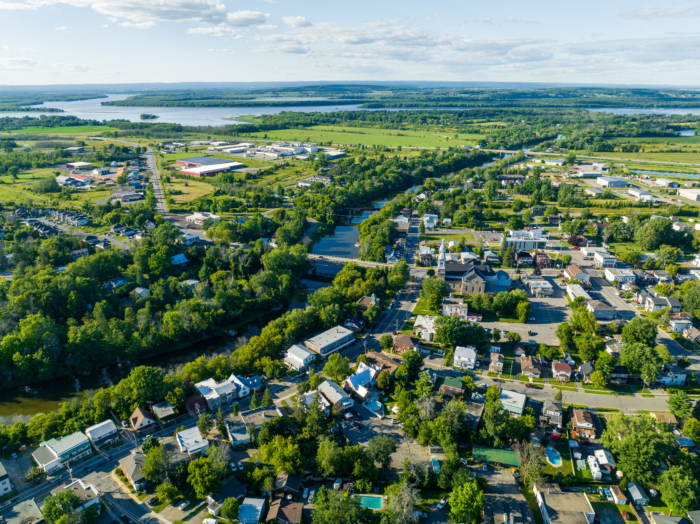
Would you like to explore the possibilities of RNG for your municipality?
Discuss the options available to you with our team, from RNG production to RNG purchasing.
Yes, if it’s produced from a renewable source. There are five main sources of renewable energy: the sun, wind, water, the earth (geothermal energy) and organic matter. Organic waste is used in the case of renewable natural gas (RNG) purchased by Énergir. Things like table scraps, wastewater, manure and agricultural slurry all have very short renewal cycles.
To meet regulatory targets for RNG, Énergir sources most of its RNG from producers in the USA. It is working to increase its supply from producers in Quebec.
The quantity of RNG purchased by Énergir from each producer is injected by the latter into the gas network of the region where the producer is located. It can therefore be injected into the gas network of Énergir or another distributor in North America, and then mixed with the fossil natural gas circulating in the same gas network. So, as with its fossil natural gas supply or electricity supply, once the purchased energy is injected into the gas or electricity grid, it is not possible to track the gas molecule or electron. The gas molecule or electron is consumed by the various users connected to these networks.
The quantity of RNG purchased by Énergir reduces the quantity of fossil natural gas that Énergir buys as part of its overall supply.
Since the RNG and fossil natural gas molecules flow through the same gas network and are mixed together indistinguishably, Énergir has a verification body conduct an annual verification to ensure that its total annual supply from RNG producers is at least equal to the quantity of RNG purchased by all its customers and that the RNG purchased is 100% organic (and does not include any fossil molecules).
For more information, see the question “What ensures that the amount of RNG I voluntarily purchased is correctly attributed to my home?”
Énergir has switched to purchasing renewable natural gas for the buildings it owns. For example, Énergir purchases RNG for its eight regional business offices, its head office, the École de technologie gazière and the LSR plant in an amount equivalent to its consumption of fossil natural gas for these facilities. The same will apply for our future business office in the Eastern Townships, which is currently under construction. For more information, see the section “Understanding your RNG purchase.”
This choice directly supports our objective to reduce fossil-based GHG emissions from our facilities and is part of meeting the decarbonization targets for buildings in Quebec.”
RNG combustion is not emission-free; it generates GHG emissions (CO2, CH4 and N2O) just like the combustion of fossil natural gas. CO2 is the main GHG that is generated (over 99% of combustion emissions). For RNG, though, the CO2 emissions from its combustion are said to be biogenic because they come from biomass. Biogenic CO2 emissions are not generally targeted by climate change objectives, unlike emissions from the combustion of fossil natural gas. Although CO2 from the combustion of fossil natural gas can be reabsorbed by biomass during photosynthesis, burning fossil natural gas releases CO2 that has been sequestered for millions of years in geological formations and results in a net addition of CO2 to the atmosphere. In contrast, the CO2 released into the atmosphere from RNG combustion (biogenic CO2) was sequestered in organic matter (food waste, manure, wastewater, etc.), which renews much more rapidly, on a scale ranging from a few months to a few years. The biogenic CO2 was present in the atmosphere, was absorbed by organic residues and could be again re-emitted into the atmosphere. Biogenic CO2 is therefore part of the short carbon cycle. The actual effect of biogenic CO2 emissions from RNG combustion on the climate depends on a number of factors, including the biomass source and production processes. RNG sold by Énergir to its customers is produced from organic waste and has not led to significant changes in land use.
Although also biogenic, N2O and CH4 combustion emissions (less than 1% of combustion emissions) from RNG must be reported in the direct emissions (Scope 1 emissions) of the person or entity using RNG in their GHG inventory.
Biogenic CO2 emitted during combustion also has to be quantified. Provided that the applicable rules (including RNG traceability) of the standard used to perform the GHG inventory allow it, biogenic CO2 must be reported separately from Scope 1 emissions in the GHG inventory. The regulations governing the declaration of GHG emissions and Quebec’s GHG cap-and-trade system (CATS) stipulate that these CO2 emissions must be reported but do not have to be covered by emission allowances under Quebec’s GHG cap-and-trade system.
RNG production emits GHGs. GHGs are also emitted during RNG transmission and distribution.
Énergir has a regulatory obligation to distribute a minimum amount of RNG during its fiscal year (2% in 2023-2024, 5% in 2025-2026 and 10% in 2030-2031). If customers do not voluntarily purchase a portion of that RNG, Énergir charges them for unsold volumes equal to at least the regulatory threshold, on their own gas consumption.
Thus, if demand from voluntary customers does not exceed the regulatory threshold regarding the quantity of RNG to be delivered, voluntary purchases will not impact the reduction of GHG emissions in Québec attributable to RNG. Conversely, if voluntary purchases exceed that regulatory threshold, they enable a further reduction of GHG emissions from RNG with respect to Québec.