







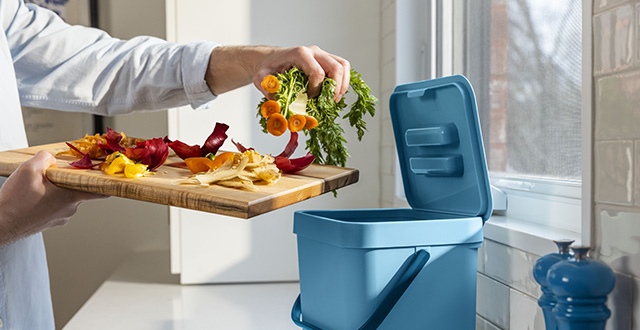
What is renewable natural gas?
It is 100% renewable energy produced from organic waste. RNG replaces fossil fuel energy with renewable energy in the gas network to reduce greenhouse gas (GHG) emissions targeted by the fight against climate change.
How is RNG distributed?
The RNG purchased by Énergir is injected into the North American gas network (of Énergir and other distributors) where fossil natural gas circulates. Renewable natural gas and fossil natural gas therefore circulate in the same pipes. Since the molecules of renewable and fossil natural gas travel together and are completely interchangeable, it's impossible to differentiate between what's actually going to customers' appliances. The volumes of RNG you purchase are shown on your detailed invoices for total natural gas consumption.
Renewable natural gas, appropriate energy for the energy transition

Reducing greenhouse gas emissions from fossil fuels
Renewable natural gas (RNG) reduces the greenhouse gas emissions targeted by the fight against climate change in two ways: by recovering the methane produced by the natural decomposition of organic matter, and by replacing fossil fuel with a renewable energy source. Moreover, Énergir, must ensure that it meets the required RNG volumes each year to replace volumes of fossil natural gas, in order to comply with the regulatory obligation related to RNG.
To find out more about GHG emissions from RNG and the impact on Quebec’s GHG emissions and your own GHG footprint of voluntarily purchasing RNG, see our answers here.

Value-added organic waste
Turning your vegetable peels or other food waste into RNG is easier than you think! The methane emitted by the decomposition of organic matter can be recovered to produce renewable energy. The RNG production process also produces a fertilizer that can be used, under certain conditions, on flower beds and farmland.

Energy that can be locally produced
Did you know that your municipality can produce renewable natural gas using your organic waste? It is in fact a very effective solution for municipalities in managing their waste.

Supporting the circular economy
Waste that can be used to generate energy : I’ll buy that! RNG production can be an opportunity for municipal governments, farmers and other types of businesses to turn their organic waste into new streams of revenue.
Renewable natural gas purchases are available to all Énergir customers.
Shining the spotlight on some local producers
To meet the growing demand for renewable natural gas, Énergir is sourcing from North American producers, primarily in the United States, but there are an increasing number of them in Quebec. More about renewable natural gaz in Quebec.
Saint-Hyacinthe
In operation since January 2018, Saint-Hyacinthe was the first city in Quebec to produce energy through biomethanation and move one step closer to energy self-sufficiency. The amount of RNG it produces is sufficient, among other things, to heat buildings and power city vehicles. This production thus helps reduce GHG emissions from fossil fuels. This is a fine example of utilizing methane emissions from waste and generating renewable energy locally.
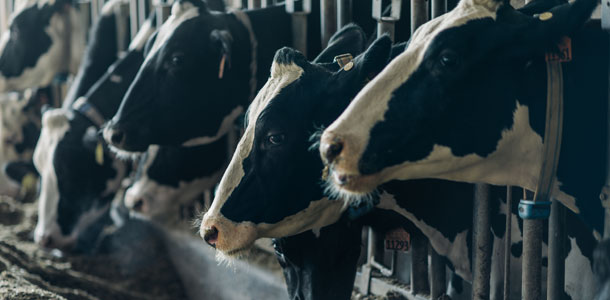
Coop Agri-Energy Warwick
Coop Agri-Énergie Warwick is the very first agricultural cooperative dedicated to renewable energy production in Quebec. It brings together a dozen agricultural producers from the Arthabaska RCM, which have been producing renewable natural gas from slurry and dairy cattle manure mixed with residual organic matter from local businesses since spring 2021. The biomethanation facilities were developed, built and are run by Coop Carbone, a non-profit solidarity cooperative working to develop cooperative agricultural biomethanation projects.
City of Québec
Since February 2024, the City of Québec has been injecting renewable natural gas into Énergir’s network. The Québec agglomeration biomethanation centre (CBAQ) treats up to 86,600 tonnes/year of food waste, as well as up to 96,000 tonnes/year of biosolids from the wastewater treatment plant.
Are you interested in developing a GNR production project?
Learn more
Yes, if it’s produced from a renewable source. There are five main sources of renewable energy: the sun, wind, water, the earth (geothermal energy) and organic matter. Organic waste is used in the case of renewable natural gas (RNG) purchased by Énergir. Things like table scraps, wastewater, manure and agricultural slurry all have very short renewal cycles.
Énergir is working hard to reduce the carbon footprint of the natural gas it distributes, and believes that RNG is one of the ways to get there. Energir’s regulatory target is to distribute 5% of RNG to its network in fiscal 2026–2027 as a replacement for fossil natural gas. To ensure the distribution of growing volumes, Énergir is sourcing from various North American producers, including a growing number in Quebec. Quebec’s RNG industry has the potential to go much further, and our teams are working hard to mobilize all the players involved in its development.
Our wish is to get the full value out of every food item. However, we are aware that no matter how hard we try to reduce food waste, certain organic materials such as pits, scales and some skins and peels will never be eaten. With renewable natural gas, we want to reuse the organic matter that ends up brown bins to give it a second life bursting with energy.
Énergir firmly believes that making complementary use of a variety of energy sources is an effective way of reducing greenhouse gases from fossil sources. As we always say, you need the right energy in the right place!
That’s why we’re using renewable natural gas to decarbonize energy uses that are difficult to electrify. This is particularly the case when a flame is required in an industrial process, or to heat buildings in areas where electrical capacity is saturated.
To meet regulatory targets for RNG, Énergir sources most of its RNG from producers in the USA. It is working to increase its supply from producers in Quebec.
The quantity of RNG purchased by Énergir from each producer is injected by the latter into the gas network of the region where the producer is located. It can therefore be injected into the gas network of Énergir or another distributor in North America, and then mixed with the fossil natural gas circulating in the same gas network. So, as with its fossil natural gas supply or electricity supply, once the purchased energy is injected into the gas or electricity grid, it is not possible to track the gas molecule or electron. The gas molecule or electron is consumed by the various users connected to these networks.
The quantity of RNG purchased by Énergir reduces the quantity of fossil natural gas that Énergir buys as part of its overall supply.
Since the RNG and fossil natural gas molecules flow through the same gas network and are mixed together indistinguishably, Énergir has a verification body conduct an annual verification to ensure that its total annual supply from RNG producers is at least equal to the quantity of RNG purchased by all its customers and that the RNG purchased is 100% organic (and does not include any fossil molecules).
For more information, see the question “What ensures that the amount of RNG I voluntarily purchased is correctly attributed to my home?”
RNG combustion is not emission-free; it generates GHG emissions (CO2, CH4 and N2O) just like the combustion of fossil natural gas. CO2 is the main GHG that is generated (over 99% of combustion emissions). For RNG, though, the CO2 emissions from its combustion are said to be biogenic because they come from biomass. Biogenic CO2 emissions are not generally targeted by climate change objectives, unlike emissions from the combustion of fossil natural gas. Although CO2 from the combustion of fossil natural gas can be reabsorbed by biomass during photosynthesis, burning fossil natural gas releases CO2 that has been sequestered for millions of years in geological formations and results in a net addition of CO2 to the atmosphere. In contrast, the CO2 released into the atmosphere from RNG combustion (biogenic CO2) was sequestered in organic matter (food waste, manure, wastewater, etc.), which renews much more rapidly, on a scale ranging from a few months to a few years. The biogenic CO2 was present in the atmosphere, was absorbed by organic residues and could be again re-emitted into the atmosphere. Biogenic CO2 is therefore part of the short carbon cycle. The actual effect of biogenic CO2 emissions from RNG combustion on the climate depends on a number of factors, including the biomass source and production processes. RNG sold by Énergir to its customers is produced from organic waste and has not led to significant changes in land use.
Need more information?
Contact our team for answers.

© 2004-2026, Énergir. All rights reserved.