








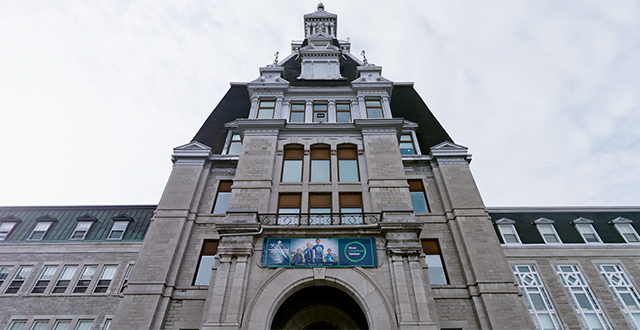
Collège Bourget, a private educational institution located in Rigaud, Montérégie, has been engaged in an energy transition process for several years, and wanted to modernize its energy infrastructure on a large scale while intensifying its decarburization efforts. Thanks to dual energy, a range of energy efficiency measures, and an innovative financing model, the College is expected to achieve its objectives without any upfront investment.
A critical situation
Collège Bourget receives over 1,800 students at a campus of more than 38,000 m2, consisting of numerous buildings and facilities, including some century-old buildings. Faced with the need to replace an end-of-life heating and cooling system, including some equipment that is more than 60 years old, the institution’s administration initiated a review of the efficiency of its energy assets in order to identify the best way to renew its infrastructure while minimizing operating costs and GHG emissions.
An instrumental feasibility study
As a first step, Collège Bourget, supported by C-nergie (an engineering firm specializing in energy efficiency that is now part of the E’nergys group), carried out a preliminary study to assess the situation. Then, with Énergir’s support, the College commissioned a detailed feasibility study to identify solutions that best met its needs and expectations.
“Énergir has shown a real interest in our project and a willingness to help us by anticipating our questions and by proposing [to fund] the feasibility study from the outset, even before we asked for it,” said Stéphane Amyot, Director of Finance at Collège Bourget. “This study was really the trigger that enabled us to identify many opportunities to modernize our heating and ventilation system.”
Stéphane Amyot - Director of Finance at Collège Bourget
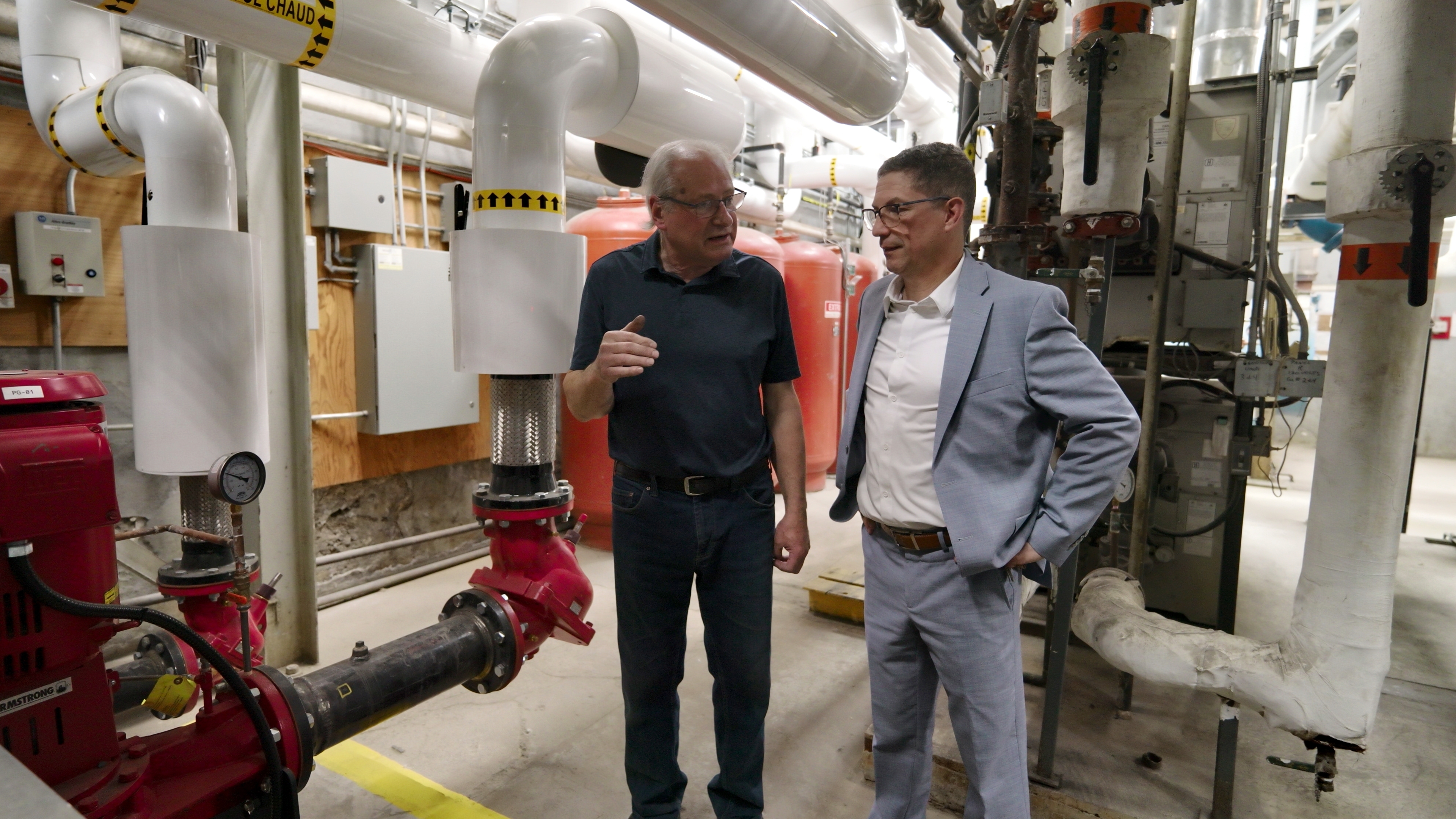
Dual energy: the key to modernization
Dual energy has quickly become the focal point of the project due to its high decarbonization capacity compared to an all-gas solution and its long-term viability in an energy transition context.
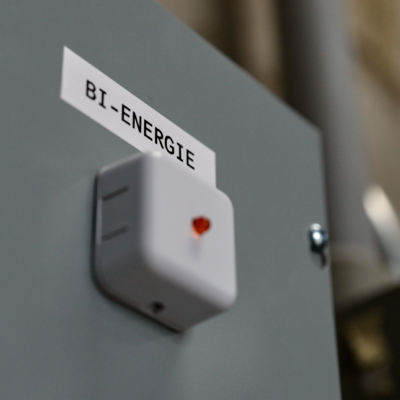
This solution was recommended to us by our engineering firm and by Énergir, namely for its ability to extend the life of existing equipment, reduce future investments and improve energy performance, while ensuring the College’s energy security.
An integrated and optimized system
Several other key measures have been added to dual energy to complete a large-scale decarbonization strategy, including:
- Optimization of heating water production (dual energy)
- Optimization of ventilation unit in the Richard wing
- Recommissioning of mechanical systems (RCx)
- Rate optimization and consolidation of electricity meters
- Demand power management
- Kitchen hood upgrading
A conversion with all-around benefits
Natural gas, formerly the main source of heating energy, is now the fourth stage of heating and has been largely replaced by electricity through the dual energy system, which uses natural gas only when temperatures drop to -12°C or lower to relieve pressure on the power grid during peak demand. By reducing its dependence on a fossil fuel, Collège Bourget is accelerating its shift to energy transition.
Promising prospects
Although an initial annual review is not yet available given the recent commissioning of the system, the expected results1 are extremely encouraging.
Over $ 3 million
in grants obtained
$ 176,000
in annual savings
87%
reduction in GHG emissions 2
Game-changing grants
In addition, thanks to financial assistance from Énergir, Hydro-Québec and the Government of Quebec through its EcoPerformance program, Collège Bourget has received over $3 million in subsidies, including $2,345,981 for the conversion to dual energy alone. This financial support significantly reduced the project’s return on investment (ROI) period from 16.2 years to 8.5 years.
A funding model without initial capital
To finance this ambitious project, Collège Bourget turned to SOFIAC, a financing solution that invests, develops and manages major energy efficiency projects in Québec. Its innovative financing model requires no capital outlay from the client. Instead, the investments are repaid from energy savings over time. The agreement between Collège Bourget and SOFIAC enabled the educational institution to obtain $4.8 million in funding for its project.
A reference project for the institutional sector
The decarbonization project at Collège Bourget eloquently illustrates how relevant energy efficiency measures (mainly dual energy, in this case), combined with an innovative financing solution and proactive collaboration among stakeholders, can transform an aging and costly infrastructure into a high-performance system that generates sustainable savings.
1. The results are from the Feasibility Study conducted for the project by engineering firm C-nergie (now part of the E’nergys Group)
2. Énergir uses Protocol QC.30, “Fuel and Combustible Distribution,” which applies to fuel and combustible distributors (such as Énergir) under the RMRCECA, to quantify emissions related to the combustion of fossil natural gas and RNG. For more information on the methodology used, visit the page Methodologies for Calculating and Demonstrating Greenhouse Gas Emissions Reductions.